
I remember my first encounter with cacao. For our honeymoon in 2017, we planned a round trip through Costa Rica. Being so close to the equator, a chocolate tour was an absolute must. I had to dig around a bit, but eventually I found one at La Tirimbina in Sarapiquí, where we got to work hands-on and made chocolate in a traditional way (without machines). All the photos on this page were taken by me or my husband.

After a 20-minute walk, we arrived at the small plantation, although it can hardly be called that, as only a few Theobroma cacao trees remained. In Costa Rica, cacao trees are affected by a fungus that attacks the fruit. It is contagious and has caused a steady decline in cacao trees, which is quite worrying. On larger plantations, a lot of effort is therefore going into developing more resistant varieties.
The cacao pods are harvested by hand. I had the pleasure of opening a ripe pod myself. Chocolate is made from the seeds inside the fruit; a single pod can contain up to 50 of them. The seeds are covered in a whitish pulp. We were allowed to taste it, and to me it was most reminiscent of banana. It tasted nothing like chocolate.

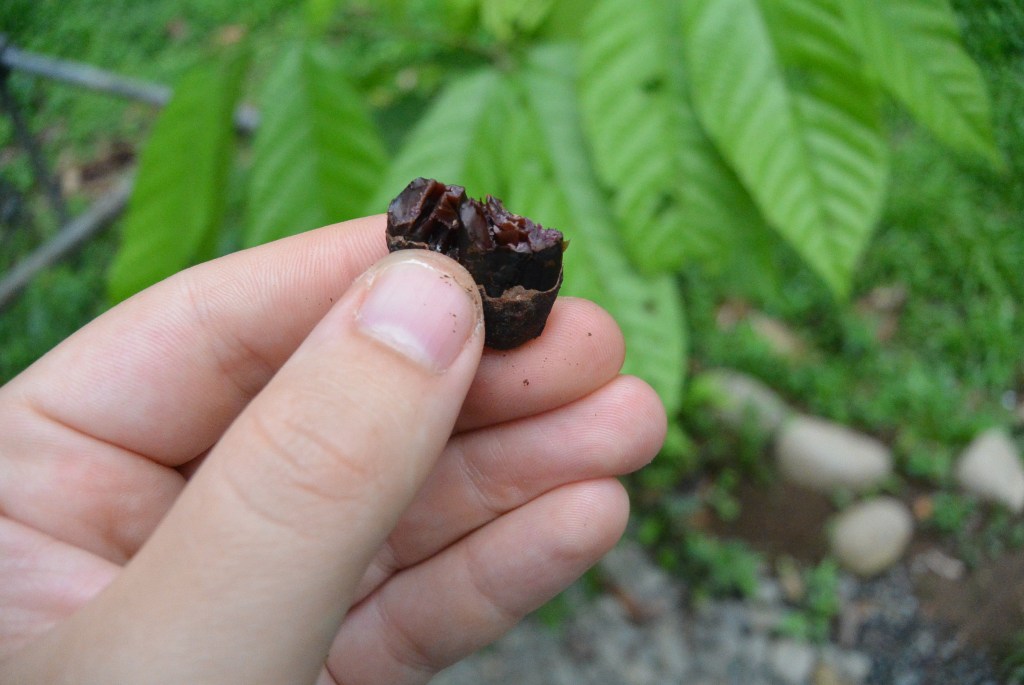
The next step is fermenting the seeds, followed by drying them. The duration of this process and how often the beans are turned influences flavour development. Exactly how and why this works is still not fully understood. Artisanal bean-to-bar makers experiment extensively with this. All stages of drying were present, and we were allowed to taste everything. The beans were hard, difficult to open, and very bitter.
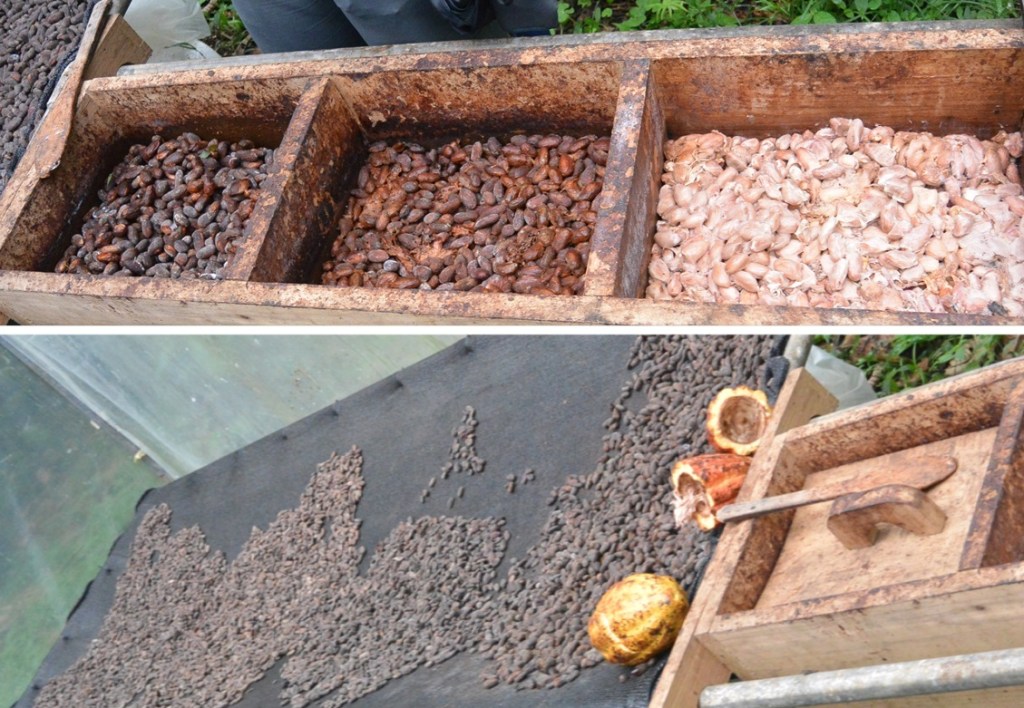
Once dried, the beans were roasted (in a small oven). This is when you finally smell the familiar, wonderful aroma we associate with chocolate. This is another step that bean-to-bar makers experiment with extensively.
Not the entire cacao bean is used to make chocolate. The beans are cracked and winnowed, and the husks are discarded. Peeling the beans also becomes easier at this stage. The flavour is still bitter, but unmistakably 100% cacao.
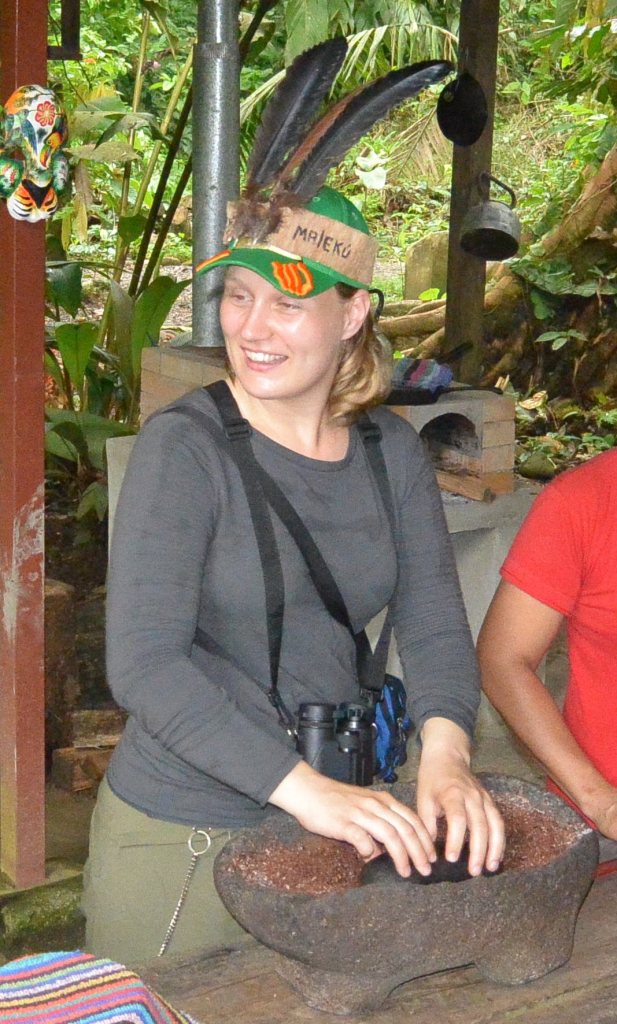
Next, it was time to grind the nibs. We did this the same way the Aztecs did: wearing a ceremonial headdress and using a special stone. It smelled amazing! Grinding it to a really fine consistency took a very long time. The resulting paste could be shaped by hand and tasted delicious. Similar to the flavour of the whole roasted bean.
The Aztecs drank a cacao beverage called xocoatl. We made this drink as well by adding warm water to the cacao paste. The drink was mixed in ceremonial cups by dramatically pouring it from one cup to another. We could add spices such as cinnamon and chili to taste.
At the end of the tour, we received a small bag of roasted beans to take home so we could repeat the process ourselves. I found it an incredibly special experience and as I wrote this, I hope that one day I’ll also get to see how modern bean-to-bar makers produce chocolate today.
*I translated this article from my Dutch blog, as it was my very first introduction to cacao.
 By Diënty
Leave a comment