


The science of chocolate
- Comparing cocao of 7 Indian grown cacao clones
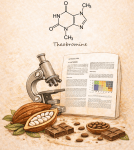 Working at a molocular laboratory, I thought it would be interesting to look at the genetics of cacao. I started looking and found this cool paper that looks at cacao growing in a country most people won’t directly associate with cacao: India, specifically in the unusual region of Terai.In this paper they compare several cocoa clones with each other, and ask which ones give the most promising quality beans after processing, looking at a lot of things that would be good to review when determining what genetic variety to eventually plant to get the best product (high volume and good… Read more: Comparing cocao of 7 Indian grown cacao clones
 - Wood smoke gives cocoa beans smoky off-flavorsOne of the often recognised ‘off-flavours’ in cacao is a smoke-like flavour. It’s something I’ve heard people talk about frequently (as some people like it, though most consider it a defect); therefore, I thought this paper would be a great first pick for the first “the science of chocolate” post. What motivated the authors A lot of progress has been made to identify the odorants (smell molecules) responsible for the flavours in cacao. There have been 20-30 good (pleasant) ones identified, but there are also bad (unpleasant) odorants found. The authors wanted to look for the source of some of… Read more: Wood smoke gives cocoa beans smoky off-flavors
- The science of chocolateHere, you can learn more about some of the ongoing scientific research behind chocolate. As a scientific officer with a background in microbiology, I am used to reading scientific literature, working with experimental data, and following developments in the research community. We are expected to dig into publications of our respective fields and focus on how the research was done and what the results actually mean. During my visits to Chocoa and Amsterdam Cocoa Week in 2025, talking to makers, traders and retailers, I realised that there is a growing interest in what the scientific community is researching. Many people… Read more: The science of chocolate
Chocolate posts
- Making drinking chocolate like the Aztecs (xocoatl)
 I remember my first encounter with cacao. For our honeymoon in 2017, we planned a round trip through Costa Rica. Being so close to the equator, a chocolate tour was an absolute must. I had to dig around a bit, but eventually I found one at La Tirimbina in Sarapiquí, where we got to work hands-on and made chocolate in a traditional way (without machines). All the photos on this page were taken by me or my husband. After a 20-minute walk, we arrived at the small plantation, although it can hardly be called that, as only a few Theobroma… Read more: Making drinking chocolate like the Aztecs (xocoatl)
Nieuwste recepten



Food talk
- The big five: Vocht
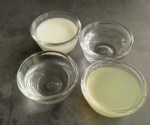 Graag wil ik jullie wat meer vertellen over ‘The big five’ van de (thuis)bakker, zoals Eke Mariën ze in zijn bakboek ‘bakken met kennis’ noemt. Meel, vet, eieren, vocht en suiker. Vocht wordt vaak vergeten of men ziet het niet gezien als een ingrediënt. Zelf vond ik dit de lastigste van de 5 om uit te leggen, vooral omdat het zo gigantisch veel omvat. Meestal (uitzonderingen nagelaten) is vocht onmisbaar in je baksel. De slogan van het stoepje “I Love Natte Cake” is bekend bij vele, maar hoe zit het nu precies met vocht? Hoe gebruik je melk, water en… Read more: The big five: Vocht
 - The big five: Suiker
 Graag wil ik jullie wat meer vertellen over ‘The big five’ van de (thuis)bakker, zoals Eke Mariën ze in zijn bakboek ‘bakken met kennis’ noemt. Meel, vet, eieren, suiker en vocht. Suiker is een ‘hot en happening’ thema en het gebruik van verschillende soorten geeft een ander resultaat in je baksel. Hoewel ik zeker geen expert ben, deel ik graag met je wat ik na wat zoeken, luisteren, lezen en speuren heb geleerd over suiker.
 - The big five: Eieren
 Graag wil ik jullie wat meer vertellen over ‘The big five’ van de (thuis)bakker, zoals Eke Mariën ze in zijn bakboek ‘bakken met kennis’ noemt. Meel, vet, eieren, suiker en vocht. Een ei hoort erbij! Of toch niet? Een ei is enorm veelzijdig en zeer voedingsrijk. Bakken zonder eieren is een uitdaging. Graag vertel ik jullie wat ik na wat zoeken, luisteren, lezen en speuren heb geleerd.
 By Diënty