
This time we take a look at a comparative study that puts two different DNA sequencing technologies head to head on the same topic: cacao fermentation.
Can a cheaper, portable option actually replace the lab-bound gold standard? The authors of this paper followed a spontaneous fermentation of Nacional x Trinitario cacao in Ecuador, sampling at several day’s. They then analysed every sample using both an Illumina sequencer and a small, portable Oxford Nanopore MinION device. This was the first time this particular device (the MinION) has been tested and compared on the specifics of cacao fermentation.
Shotgun metagenomics, and Illumina versus Nanopore (a little background first)
Most microbiome related studies, cacao included, have traditionally used a shortcut way of reading the DNA called amplicon sequencing. Which means rather than reading all the DNA ‘letters’ in a sample, you copy and read just one specific gene that differs slightly between different species, using it like a kind of barcode to identify who’s there. This is a relatively fast and cheap way to identify an organism in a sample, but it can only tell you which organisms are present, and it can introduce its own bias depending on which barcode gene is chosen.
Shotgun metagenomics is a form of sequencing that skips this shortcut. It reads all the DNA ‘letters’ in a sample, from every organism at once. Which is why this is the more expensive and more complicated method to analyse. But it gives a far more complete picture, including which genes those organisms are using.
In this case, the two sequencing platforms in this study represent the two very different ways of doing that. Illumina is the established, lab-based standard shortcut: highly accurate, but the machine is large (not something to walk around with), and generates its results in fairly short DNA fragments that need to be pieced back together like a jigsaw.
The Oxford Nanopore’s MinION is the other option: The machine is small enough to fit in your pocket, capable of reading much longer stretches of DNA in one go, and able to work outside a specialised lab. But historically the technique less accurate (makes more reading mistakes) at getting each individual DNA letter right. That trade-off, portability and speed versus raw precision, is exactly what this paper set out to test and compare in a real fermentation.
What motivated the authors
Cacao fermentation’s flavour comes down to a fast-changing succession of different yeasts, lactic acid bacteria and acetic acid bacteria, all working through the pulp over several days. Understanding and eventually controlling that succession, requires knowing exactly which microbes are present and what they’re doing at each stage. Here, Nanopore’s promise of cheap, in-field sequencing (rather than sending the samples away to a lab and waiting for the other lllumina sequencing) could make that kind of monitoring realistic for producers. But nobody had yet tested whether Nanopore’s results actually agree with the trusted Illumina method on this specific cacao cross, or whether its lower accuracy would end up misleading rather than helping.
What they did
Cacao beans were fermented in a small wooden box on an Ecuadorian farm, with samples pulled out at 0, 24, 48, 72 and 96 hours. Each sample went through three parallel approaches: 1- Traditional culture-based isolation, so first growing the microbes on agar plates and confirming their identity by using Sanger sequencing, the older, highly accurate but slow one-gene-at-a-time method. 2- direct Illumina shotgun sequencing, reading all of the DNA in jigsaw form, and 3- Nanopore shotgun sequencing using the MinION.
The sequencing platforms’ raw DNA reads were compared against reference databases to assign each fragment to a taxonomic group, at the order, family, genus and species level of each microbe. The two platforms’ results were then statistically compared for agreement. On top of that, the authors combined the Illumina and Nanopore data into a single “hybrid” assembly and used this to work out not just who (what microbes) were there, but which genes those microbes were actively using, mapping them onto known metabolic pathways.
What they found
At the broadest level, order and family, Illumina and Nanopore sequencing outcomes told largely the same story. Both were consistent with what’s already known about cacao fermentation: lactic acid bacteria and acetic acid bacteria dominated early on in the fermentation process, giving way over time to yeasts, particularly Saccharomyces cerevisiae. Alongside acetic acid bacteria like Acetobacter pasteurianus by the end of the fermentation process. All three methods (including the older Sanger sequencing of isolated colonies), agreed on the core, well-established players.
Though when we zoom in a bit further, the platforms started disagreeing. At the species level, only 1.77% of all detected taxa were picked up by both platforms, and the correlation between the two datasets essentially fell apart at the genus and species level. Nanopore also consistently over-detected certain gut- and soil-associated bacteria, including E. coli and Salmonella, at levels that don’t match what’s normally reported in cacao fermentation.
The authors suspect this isn’t necessarily a true biological signal: because these organisms are so thoroughly studied, they have unusually complete reference genomes in the databases used for classification, so Nanopore’s less accurate, longer reads may simply be more likely to get matched to those familiar, well-documented genomes over the correct, but more obscure and less well-catalogued, cacao fermentation species. It’s a useful reminder that a sequencing result is only as good as the reference library it’s compared against.
There were a few genuine new discoveries too. The sequencing-based methods uniquely picked up Acetobacter ascendens, a bacterium rarely reported in cacao fermentation, showing up specifically in the later stages, something the older culture-based approach missed entirely. Both sequencing platforms also detected bacteriophages, viruses that infect bacteria, including one newly catalogued group that increased later in the fermentation process. The authors note these bacterial viruses could plausibly help shape the microbial community by killing off certain bacteria and releasing their enzyme contents into the cacao pulp, though that role isn’t confirmed yet.
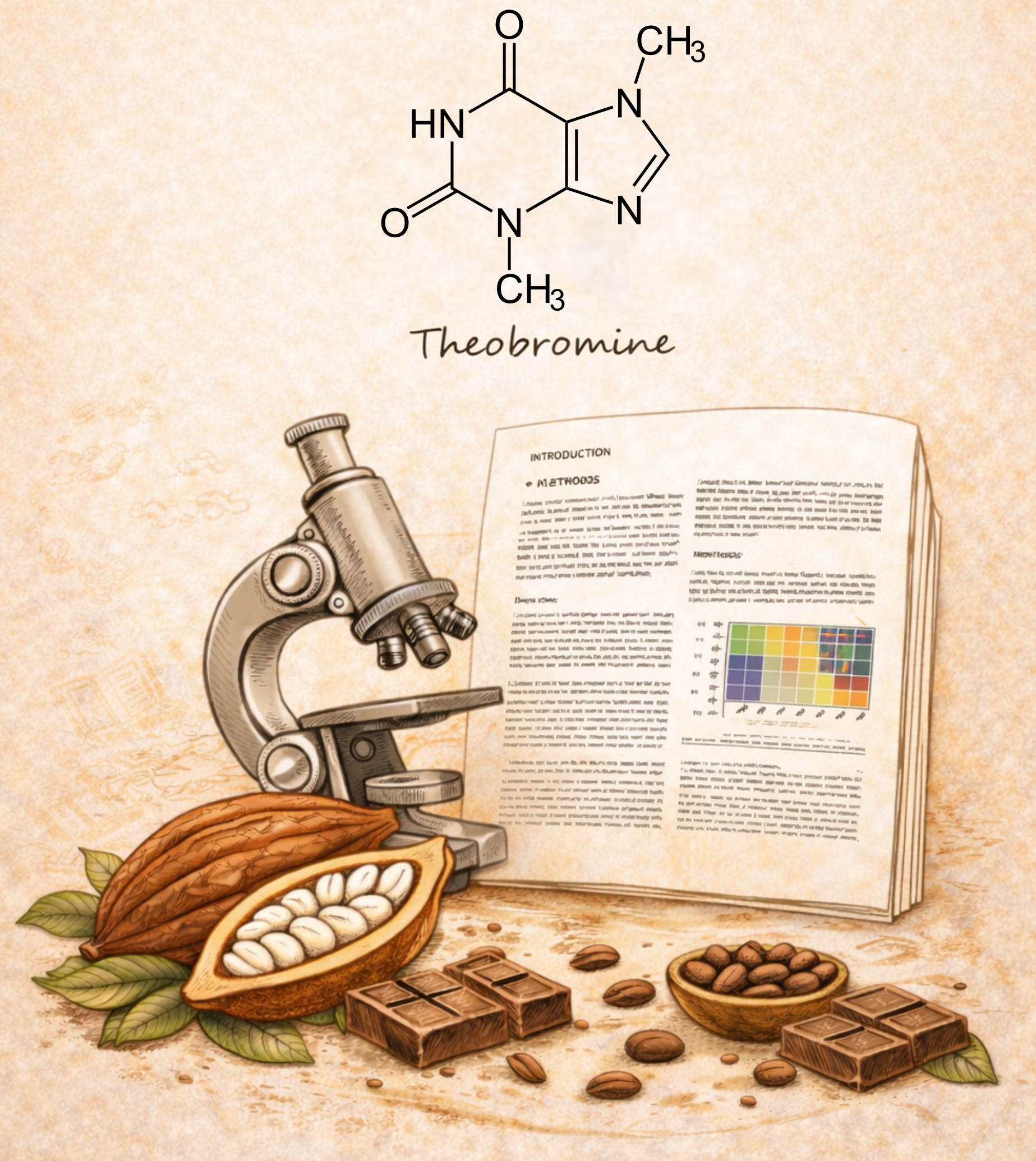
The functional side of the analysis, looking at which genes were actually switched on (used) rather than just which species were present, connected several specific microbial genes to flavour outcomes: lactic and acetic acid bacteria genes involved in producing benzaldehyde and 2-phenylethanol (linked to fruity, malty and floral notes), diacetyl and acetoin (buttery, creamy notes), and enzymes that break down bitter, astringent polyphenol compounds in the beans. Genes involved in producing theobromine, the alkaloid responsible for a good deal of chocolate’s characteristic bitterness and one of its more talked-about health-related compounds, were also detected shifting over the course of fermentation.
Summary
Nanopore sequencing held up well at the broad-strokes level when compared to Illumina sequencing results. Correctly capturing the same overall succession of yeasts and bacteria that Illumina and traditional culturing have always shown, which is genuinely promising for its use as a fast, portable, on-farm monitoring tool. But at the detailed species level (where the details that actually distinguish one fermentation’s microbial fingerprint from another’s live), the two platforms told meaningfully different stories. The authors are careful to flag that as a limitation rather than something to explain away. For now, it looks like Nanopore and Illumina aren’t interchangeable so much as complementary: one for a quick, in-field read of what stage a fermentation has reached, the other for the detailed species-level picture research still depends on.
Paper details
Full title: Multi-platform metagenomic characterization of the microbial community during spontaneous cacao fermentation
Authors: Joel Tigrero-Vaca, Mirian Villavicencio-Vásquez, Jonathan Coronel & Juan Manuel Cevallos-Cevallos
Journal: Frontiers in Bioengineering and Biotechnology, Volume 13, Article 1630515 (2025). Published August 26, 2025.
Official citation: Tigrero-Vaca, J., Villavicencio-Vásquez, M., Coronel, J., and Cevallos-Cevallos, J.M. 2025. “Multi-platform metagenomic characterization of the microbial community during spontaneous cacao fermentation.” Front. Bioeng. Biotechnol. 13:1630515.
Link to full article: https://doi.org/10.3389/fbioe.2025.1630515
Leave a Reply