
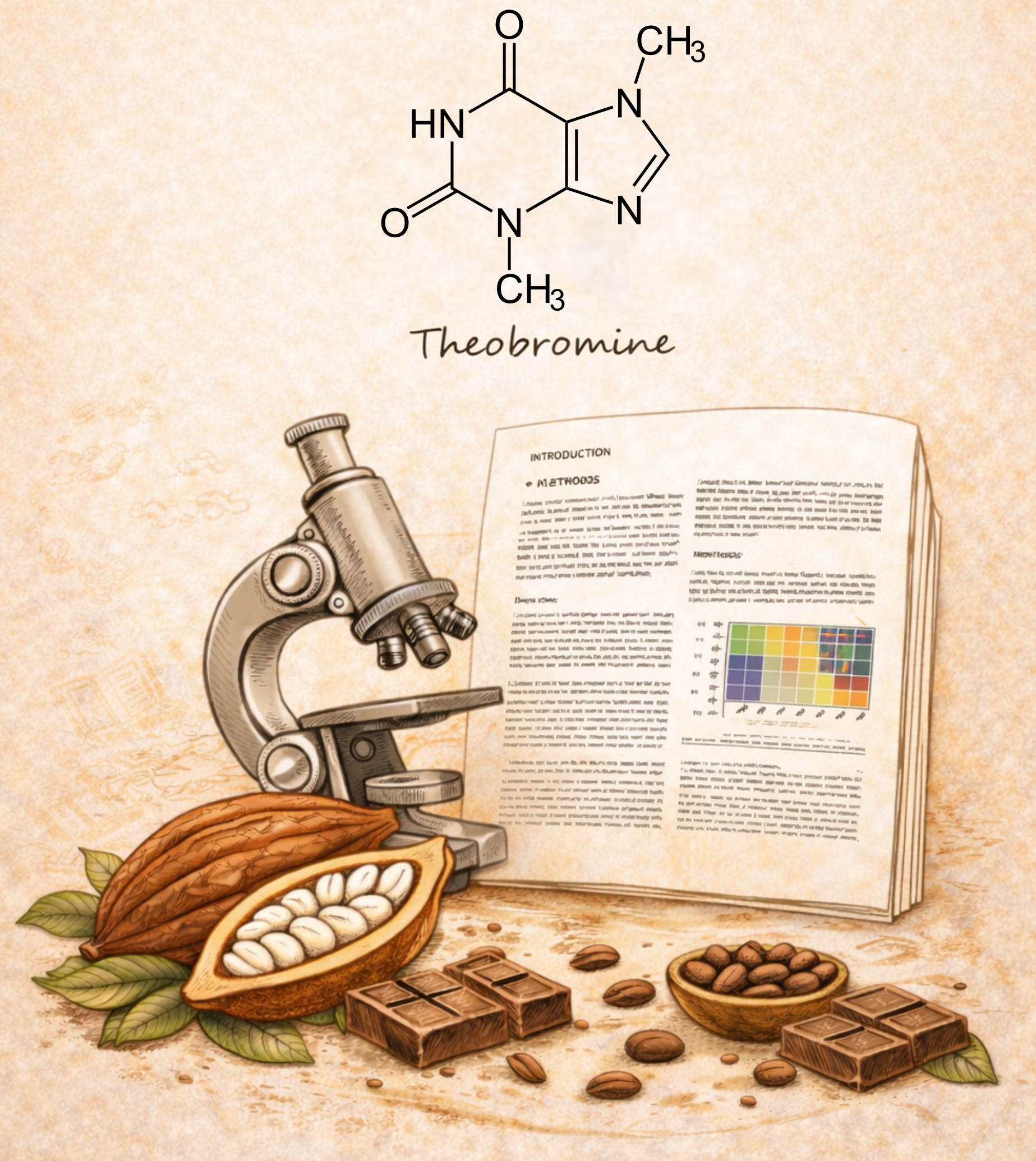
This time I looked at a soil-testing study conducted in Ghana’s Bono Region. It’s one of the country’s most important cocoa-growing areas. The paper sets out to answer a fairly blunt question: after decades of fertiliser and pesticide use on cocoa farms, how much heavy metal has actually built up in the soil, and is it a problem for the people living and working there? Not a ‘fun’ topic, but definateley an important one that should not be overlooked.
Where heavy metals in farm soil actually come from (a little background first)
“Heavy metals” in this context means a specific list of elements: arsenic, cadmium, copper, iron, mercury, nickel, lead and zinc, that occur naturally in soil at low background levels. They become a genuine problem once concentrations climb too higher amounts. Some farming practices carry these metals along as unwanted extras: certain fungicides are copper-based, some pesticides and phosphate fertilisers carry residual cadmium and arsenic as impurities from the raw minerals they’re made from. With repeated applications over years, this can leave soil far more contaminated than it started. Once metals are in the soil, cacao trees can take them up through their roots along with the water and nutrients they need, and from there on out, those metals can end up in the beans themselves, which is exactly why cadmium limits on chocolate have become such a live topic for the industry in recent years. This paper doesn’t measure the beans directly, but it measures the first link in that chain: the soil on the farms, where the trees are actually growing in, and farmers and their families often live.
What motivated the authors
Cocoa is a major part of Ghana’s economy, and the Bono Region is the country’s fourth-largest contributor to cocoa export earnings, yet there was surprisingly little data on how contaminated its farm soils actually are. Ghana also uses more pesticides than almost any other African country. Much of it is on cash crops including cocoa, and previous studies elsewhere in Africa have already linked similar farming practices to significant soil metal contamination. The authors wanted proper, current numbers for this specific region, both to gauge the scale of the problem and to work out what it might mean for the health of farmers and their families.
What they did
The authors sampled soil from 20 cocoa farms across the southern Bono Region. They took five samples from three separate plots on each farm (60 samples in total), plus 15 additional samples from an unfarmed forest reserve nearby, to use as an uncontaminated baseline for comparison. Each sample was chemically digested and measured for its concentration of eight heavy metals. For this, they chose to use atomic absorption spectrometry, a standard lab technique for measuring trace amounts of specific metals in a sample. From there, the authors ran the results through a series of established pollution calculations that compare the farm soil’s metal levels against both the natural baseline and international food and agriculture safety standards (WHO/FAO guidelines). This produced separate estimates of how contaminated the soil is, how much risk that poses to soil-dwelling organisms, and how much direct health risk it poses to the people, calculated separately for children and adults to account for their different exposure patterns and body sizes. Finally, they used statistical clustering on these results to work out which metals likely shared a common source.
What they found
Four of the eight metals, arsenic, cadmium, copper and iron, came back at concentrations that significantly exceeded the WHO/FAO safety limits for agricultural soil. With iron and arsenic levels the worst offenders, exceeding the guideline levels by over 320% and 166% respectively. Mercury, nickel, lead and zinc stayed under their respective safety limits, though even at those levels the authors note they can still pose some risk. Every single one of the twenty farms tested showed measurable soil contamination by the researchers’ combined pollution measures.
The statistical clustering of the data pointed to two largely separate sources. Arsenic, cadmium, copper and zinc tracked together, consistent with them arriving via fertilisers and agrochemicals such as copper-based fungicides and phosphate fertilisers, carrying cadmium as an impurity. Exactly the kind of everyday farm inputs described in the background above. Iron stood apart from that pattern, more likely explained by the region’s naturally iron-rich underlying geology than by anything people are adding. For soil ecosystem health specifically, cadmium and mercury levels stood out as posing a very high risk to soil-dwelling organisms, even though mercury’s raw concentration itself wasn’t especially alarming, a reminder that a metal’s toxicity to living organisms and its raw concentration aren’t always the same story.
The human health results were the most striking part of the paper. Children came out at meaningfully higher risk than adults from the exact same soil, both for general toxic effects and for lifetime cancer risk. Under the researchers’ framework, children’s combined risk score crossed into “possible health risk” territory, while adults’ stayed (only) just under that threshold. Children’s estimated lifetime cancer risk from arsenic, cadmium, nickel and lead landed in the “high risk” category, compared to a milder “tolerable risk” rating for adults exposed to the same soil.
The authors put this down to children’s smaller body size relative to how much soil particles they end up ingesting (largely through ordinary hand-to-mouth contact during play or during farm work) and their less mature systems for clearing absorbed toxins from the body. Across both age groups, cadmium and arsenic consistently came out as the two biggest single contributors to the overall risk score, and direct oral ingestion of soil was by far the largest exposure route, ahead of skin contact and breathing in dust.
Summary
Twenty out of the twenty farms came out contaminated, with four metals over international safety limits, and a clear, statistically traceable link back to routine fertiliser and pesticide use. This paints a fairly stark picture for this specific region, and the elevated risk to both adults and children living on these farms, which is the part that’s hardest to look past.
The authors’ recommendations are refreshingly practical rather than alarmist: things like raising soil pH with amendments such as biochar to help lock the metals in place and make them less available for plant uptake (the Bono soils tested were consistently on the acidic side, which makes metals more soluble and mobile). Together with better regulation of which agrochemical products are sold and used, it can make a lasting impact.
Paper details
Full title: Pollution evaluation and risk assessment of toxic metals in soils under cocoa production in Bono Region, Ghana
Authors: Alex Amerh Agbeshie, Genevieve Mensah, Vicentia Amoako, Precious Baryeh, Adisa Zibilila & Richard Awuah
Journal: Environmental Geochemistry and Health, Volume 48, Article 42 (2026). Published online December 11, 2025.
Official citation: Agbeshie, A.A., Mensah, G., Amoako, V., Baryeh, P., Zibilila, A., and Awuah, R. 2026. “Pollution evaluation and risk assessment of toxic metals in soils under cocoa production in Bono Region, Ghana.” Environ. Geochem. Health 48:42.
Link to full article: https://doi.org/10.1007/s10653-025-02932-9
Leave a Reply