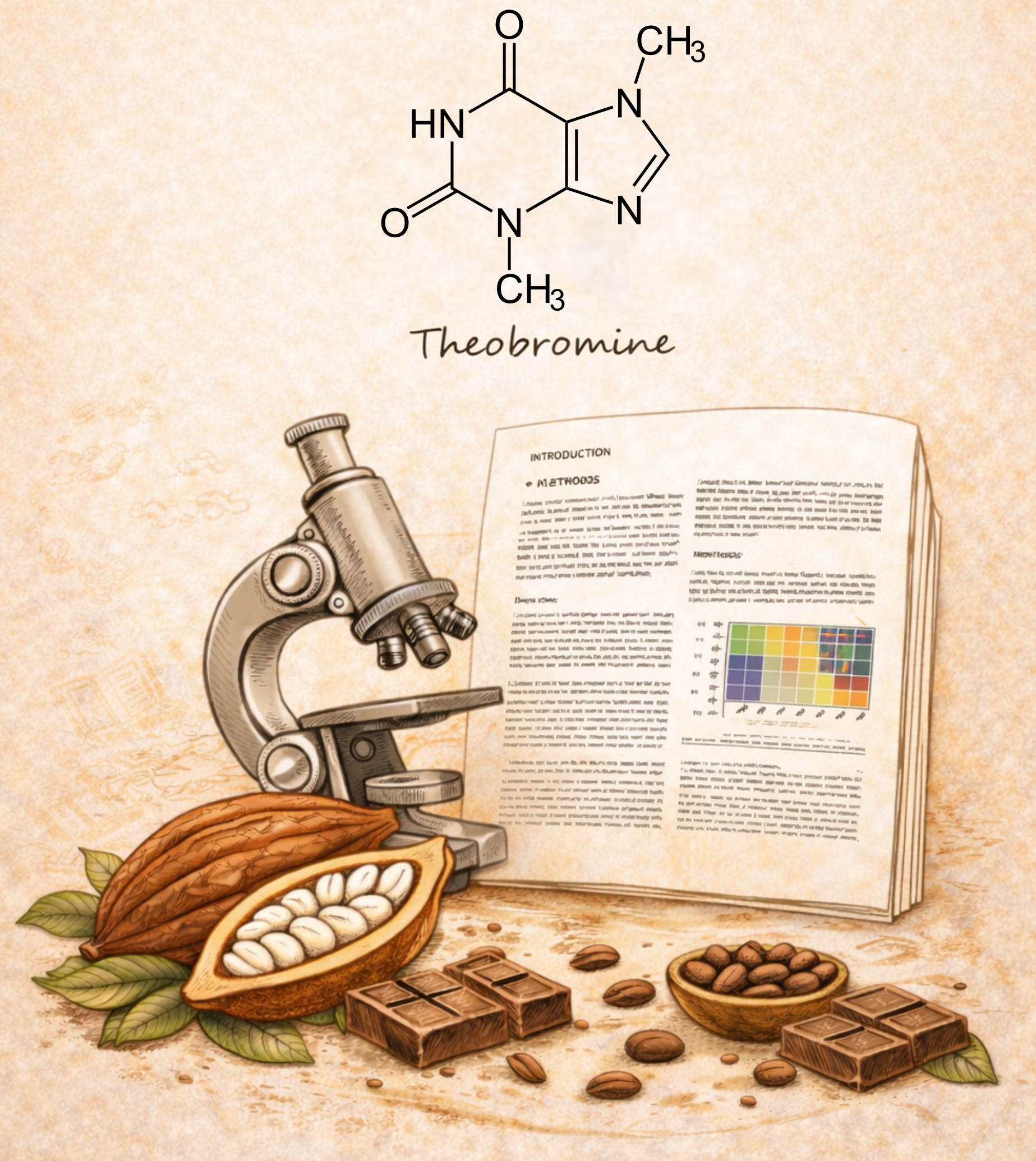
A look at a review this time: compiling what’s known about the specific role yeasts play in shaping cocoa’s flavour, and whether deliberately adding a chosen yeast strain (rather than leaving fermentation entirely up to chance) is actually worth doing. As this is a review, (not a single study) it’s a summary of several separate pieces of research, spanning basic yeast biochemistry through to real starter-culture trials run in cocoa-producing countries around the world.
What a starter culture actually is (a little background first)
Left alone in the air, cocoa pulp ferments spontaneously. Whatever mix of yeasts, bacteria and other microbes happens to already be present on the farm, on the tools, and on workers’ hands gets incorporated into the sugary pulp. The exact species and proportions can vary quite a bit from one farm, or even one batch to the next. A starter culture flips that around: Instead of leaving it to chance, producers deliberately add a specific, chosen microbe (or combination of microbes) to the fresh pulp at the start of fermentation, the same basic idea as adding a specific yeast strain to bread dough or wine must rather than waiting for wild yeast to show up on its own.
The biggest appeal of this addition is consistency: a well-chosen starter culture can make fermentation faster and more predictable, and, if you pick the right strain, can push the final flavour in a specific, desired direction.
What motivated the authors
Interest in using yeast starter cultures for cocoa fermentation has grown steadily, but the evidence for which specific strains actually help or aid flavour development (and by how much), was scattered across many separate studies using different cocoa varieties, fermentation methods, and countries of origen. The authors of this review wanted to bring that scientific evidence together in one place: first laying out exactly how yeasts build cocoa’s flavour precursor compounds during ordinary fermentation, and then reviewing what happens when specific yeast strains are deliberately used as starter cultures.
What they did
As a review, the authors didn’t run new experiments themselves. They compiled and compared findings across dozens of published studies, covering both the underlying biochemistry (which internal yeast pathways actually produce cocoa’s aroma-precursor compounds, and which yeast species are typically involved) and a wide set of real-world starter-culture trials from countries including Brazil, Ghana, Ivory Coast, Malaysia, Costa Rica, India and Cameroon.
Those trials generally worked the same way: ferment cocoa with a specific, deliberately added yeast strain (sometimes alone, sometimes mixed with lactic acid or acetic acid bacteria), compare the resulting aromatic compounds and finished chocolate against ordinary spontaneous fermentation, and see whether a trained sensory panel could tell the difference.
What they found
Yeasts dominate the first roughly 24 hours of every fermentation. It’s thriving in the pulp’s acidic, sugar-rich, low-oxygen conditions before other microbes take over. While their main job in that time window is converting the sugar into ethanol and carbon dioxide, that same metabolic activity is where cocoa’s aroma precursors get built. Yeasts produce these aroma compounds through two main internal routes:
1) breaking down amino acids; where the specific amino acid being broken down determines the resulting note (leucine trends malty and chocolatey, phenylalanine leans floral and honeyed, alanine comes out fruity),
2) through fatty acid metabolism, which produces fruity ester compounds like ethyl octanoate, associated with sour apple notes.
Saccharomyces cerevisiae, Pichia kudriavzevii, and several Hanseniaspora species turned up repeatedly across the reviewed studies as the yeasts most responsible for this.
Yeasts also do some useful housekeeping beyond flavour development. Several species produce enzymes that help break down the thick, fibrous pulp surrounding the beans, which then allows oxygen to reach the fermenting mass sooner and helps the acetic acid bacteria grow, which take over later in the process. Some strains also showed genuine antifungal activity, actively suppressing mould growth that could otherwise produce harmful mycotoxins in a poorly managed fermentation. A food-safety benefit alongside the flavour.
On the central question of whether deliberately adding a yeast starter culture actually makes for better chocolate, the picture across the reviewed trials was genuinely mixed. Several studies found real, measurable improvements: one Ghanaian trial rated chocolate made with a Pichia kluyveri starter as having the highest sweetness, fruitiness and cocoa aroma of everything tested, while other trials reported no significant sensory difference at all compared to ordinary spontaneous fermentation. A few even found mixed cultures pushing the chocolate toward more bitter or astringent notes. The authors’ honest conclusion is that at the moment, there’s no single universal “best” starter yeast.
Outcomes depend heavily on the specific strain(s), the local cocoa variety and growing conditions, and which other microbes it’s combined with, so this is more a case of matching a particular strain to a particular goal than finding one answer that works everywhere.
Summary
The main takeaway of this review is that yeasts aren’t just the opening act of cocoa fermentation, quietly making alcohol before handing things off to bacteria to do the work. They’re actively manufacturing the specific aroma-precursor molecules, the higher alcohols and esters, that go on to survive roasting and conching and eventually become the fruity, floral and malty notes people actually taste in the finished bar.
Choosing, or even purpose-breeding, the right starter strain is a genuinely promising lever for quality control, but as this review makes clear, the field hasn’t landed on one universal winner yet, and probably won’t ever manage to do so, given how much local conditions seem to matter.
Paper details
Full title: Yeasts as Producers of Flavor Precursors during Cocoa Bean Fermentation and Their Relevance as Starter Cultures: A Review
Authors: Hugo Gabriel Gutiérrez-Ríos, Mirna Leonor Suárez-Quiroz, Zorba Josué Hernández-Estrada, Olaya Pirene Castellanos-Onorio, Rodrigo Alonso-Villegas, Patricia Rayas-Duarte, Cynthia Cano-Sarmiento, Claudia Yuritzi Figueroa-Hernández & Oscar González-Ríos
Journal: Fermentation, Volume 8, Issue 7, Article 331 (2022). Published July 14, 2022.
Official citation: Gutiérrez-Ríos, H.G., Suárez-Quiroz, M.L., Hernández-Estrada, Z.J., Castellanos-Onorio, O.P., Alonso-Villegas, R., Rayas-Duarte, P., Cano-Sarmiento, C., Figueroa-Hernández, C.Y., and González-Ríos, O. 2022. “Yeasts as Producers of Flavor Precursors during Cocoa Bean Fermentation and Their Relevance as Starter Cultures: A Review.” Fermentation 8(7):331.
Link to full article: https://doi.org/10.3390/fermentation8070331
Leave a Reply